Kategorie: Telescope

  • A spray-painted telescope pt. 4

    A spray-painted telescope pt. 4

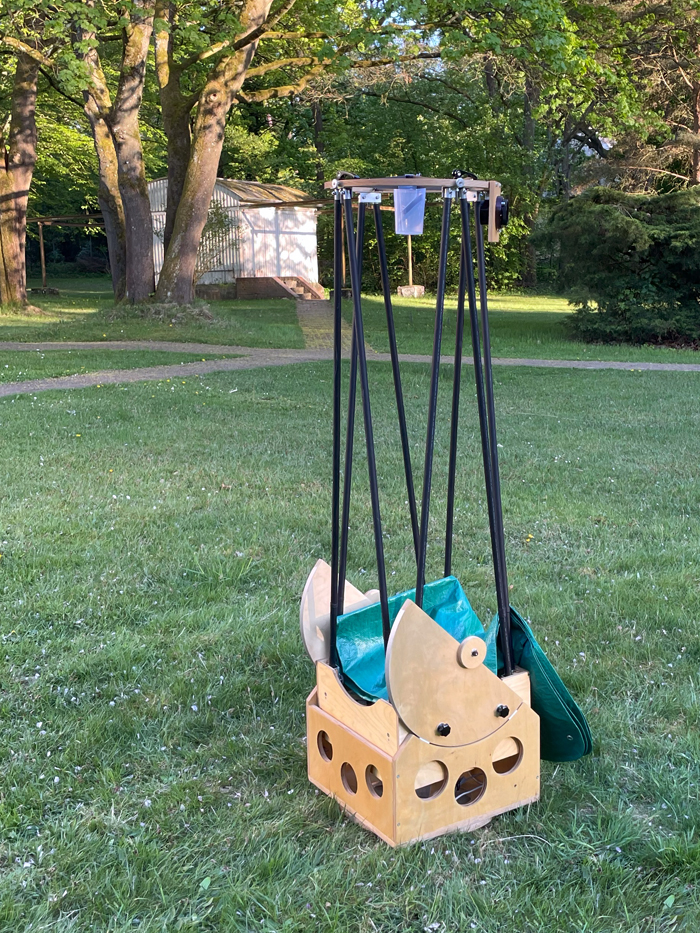
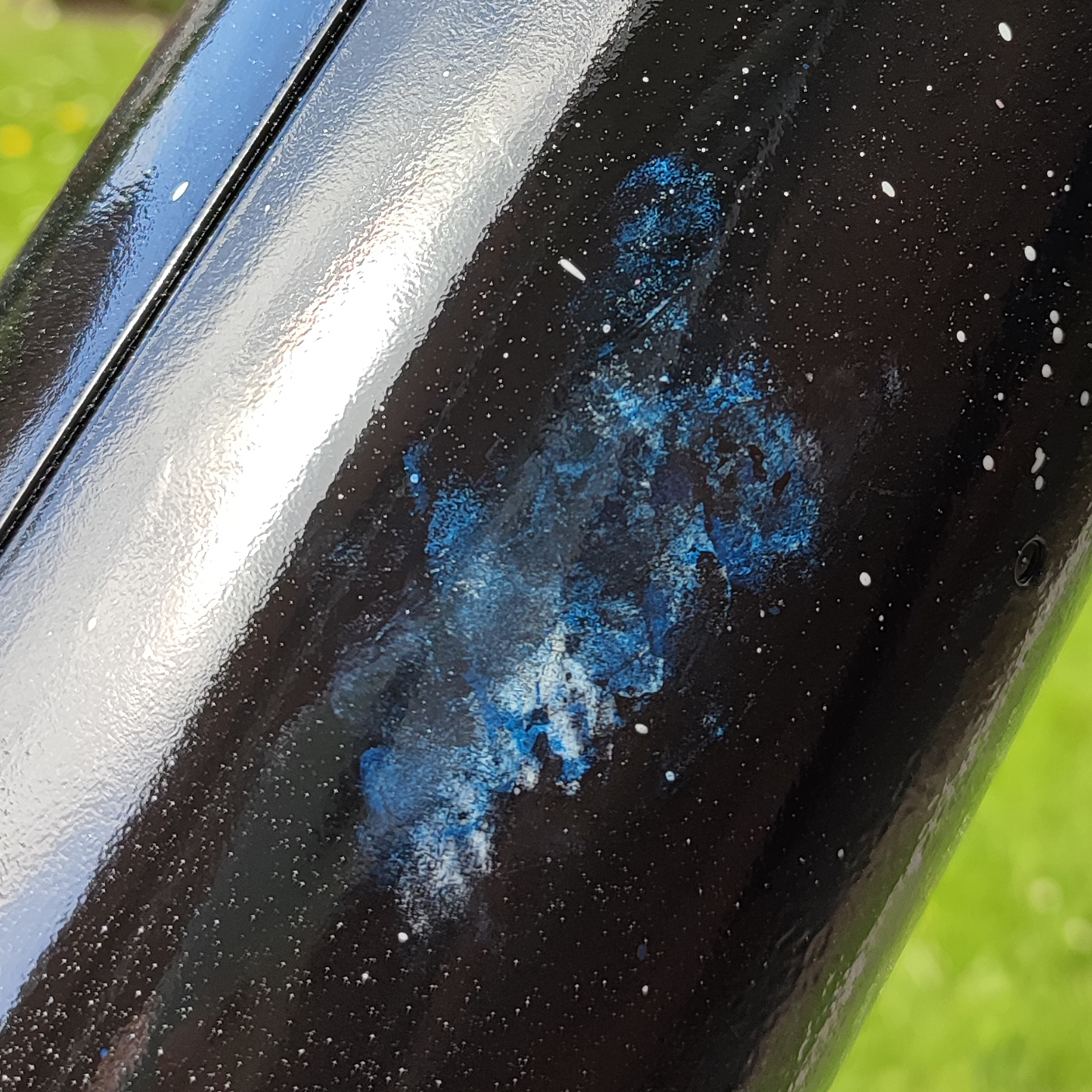
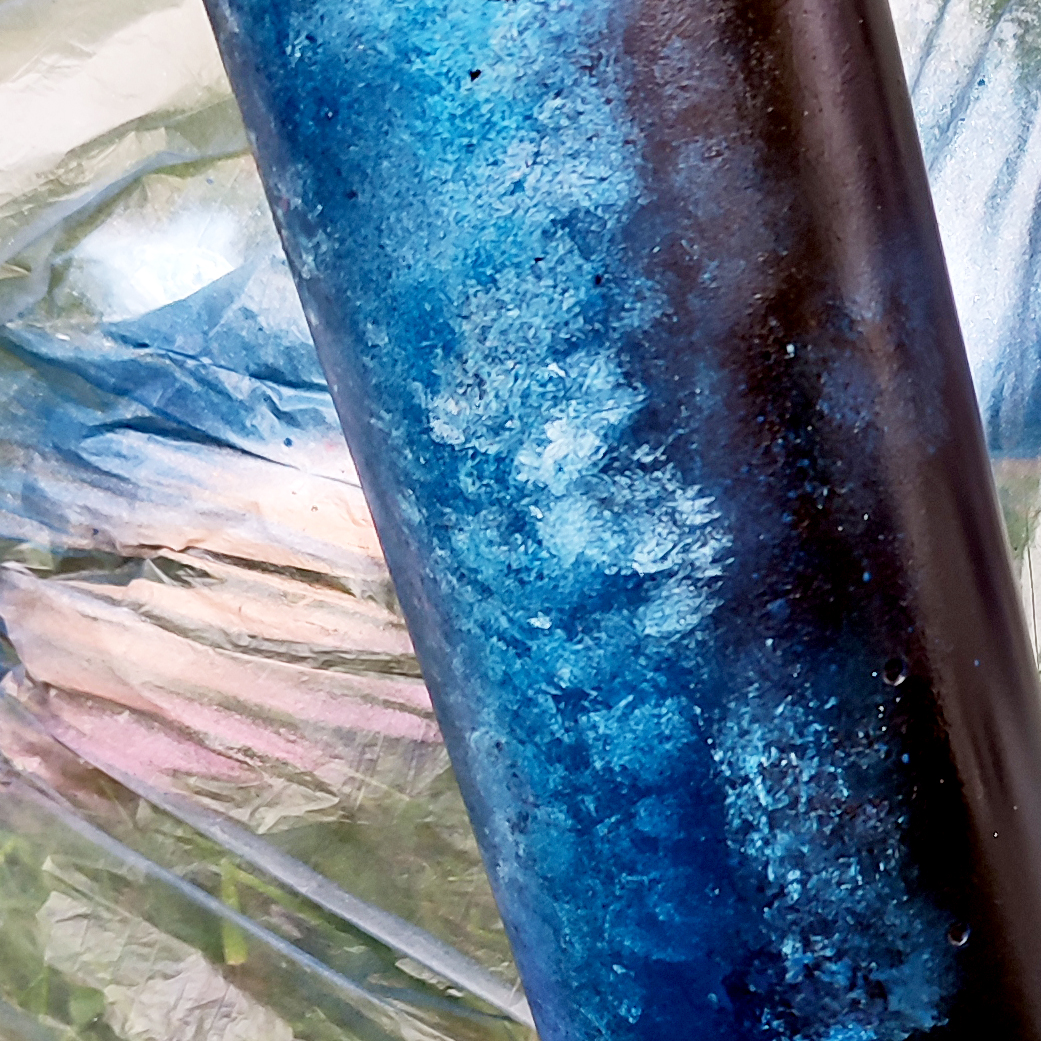
    My spraypainted telescope with clear coat

    It’s been a while since I talked about this project. But after those wrinkles I admit I was a bit frustrated. Sanding it down was quite some work. But with the wet sanding it worked best and I could smooth out most of the wrinkles.

  • A nightsky telescope (pt. 3)

    A nightsky telescope (pt. 3)

    My spraypainted telescope with clear coat

    Last part for the design, adding stars. After that it was just clear coating. Wait, just? If I hadn’t made a big mistake…

  • A nightsky telescope (pt. 2)

    A nightsky telescope (pt. 2)

    My spraypainted telescope

    The next part of my spray-paint experiment. This time I added more details to get that milky way look.

    The next part of my spray-paint experiment. This time I added more details to get that milky way look.

  • Experiments with spray-paint – A nightsky telescope (pt. 1)

    Experiments with spray-paint – A nightsky telescope (pt. 1)

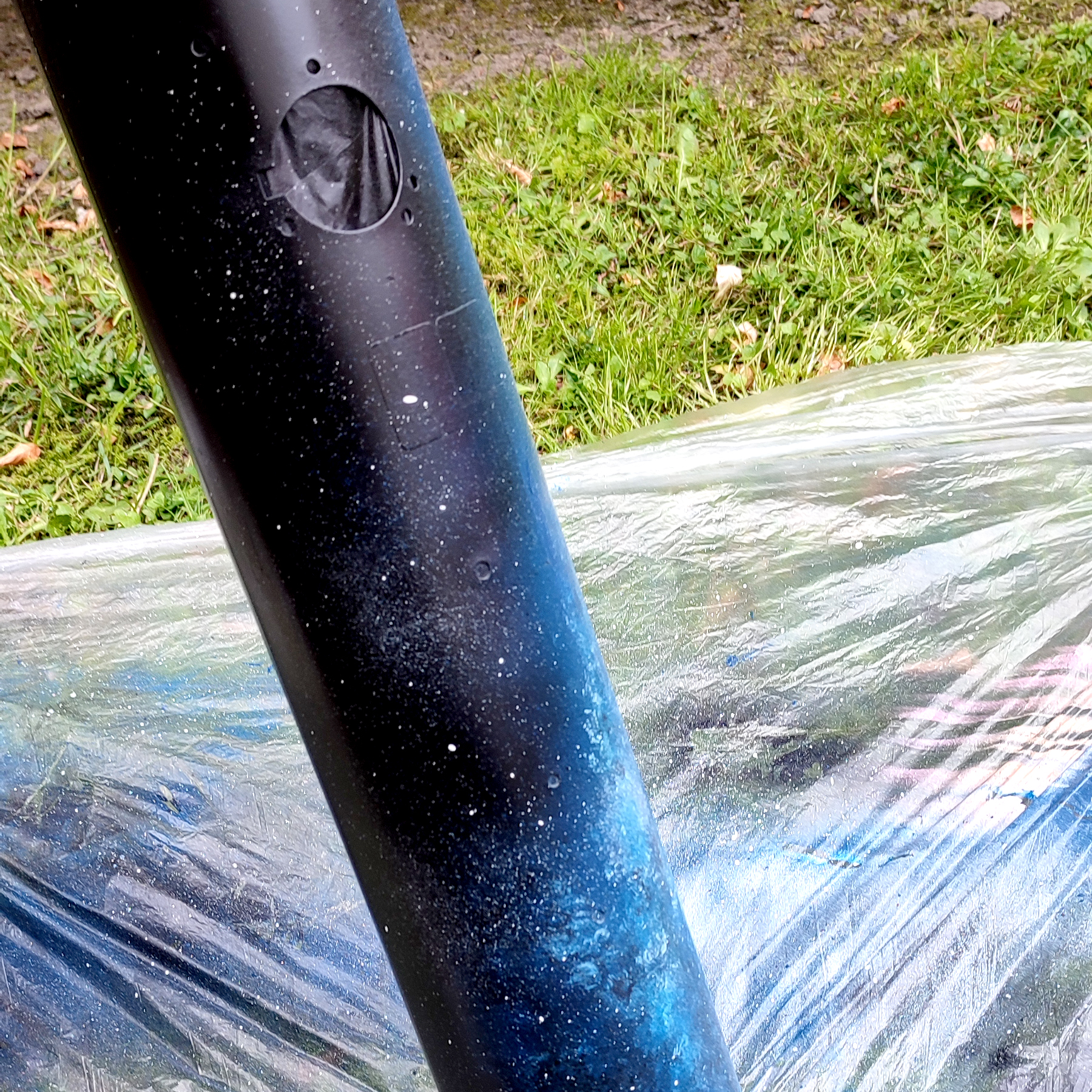
    My spraypainted telescope

    A telescope became the test subject for my first real spray-painting experiment — part art project, part equipment mod, part “let’s hope I don’t ruin the optics.”

    For this project, I used a Bresser 76/700 mm telescope similar to my first 3″ Newtonian — not the original one, but a spare-parts donor that was the perfect test subject for a night-sky spray-painting experiment. In this first part you see the deconstruction and first layers of spray paint:

  • My first telescope

    In 1999, my parents gifted me my very first telescope: a Bresser 3″ Newton (76 / 700 mm). At the time, I had no idea what I was doing – the Moon was easy to find, but everything else felt impossible. Frustrated, I put it aside. Years later, some fellow amateur astronomers showed me how to navigate the night sky. That changed everything. From then on, I took every opportunity to observe – even if it was just a small break in the clouds.

    Despite its modest size, I used it for many years – more than any other telescope, in fact. From star parties in Germany, the Silvretta High Alpine Road and all the way to Scotland, this telescope was my trusted companion. While it doesn’t offer the detail of larger optics, I always loved pushing its limits. Sometimes others didn’t even believe me that I could see faint objects despite the small scope and the light-polluted sky near Stuttgart. On the Silvretta High Alpine Road I could even see the veil nebula. And it’s incredibly handy: lightweight, fast to set up, and perfect for a quick look at the stars.

  • A step toward more aperture

    A step toward more aperture

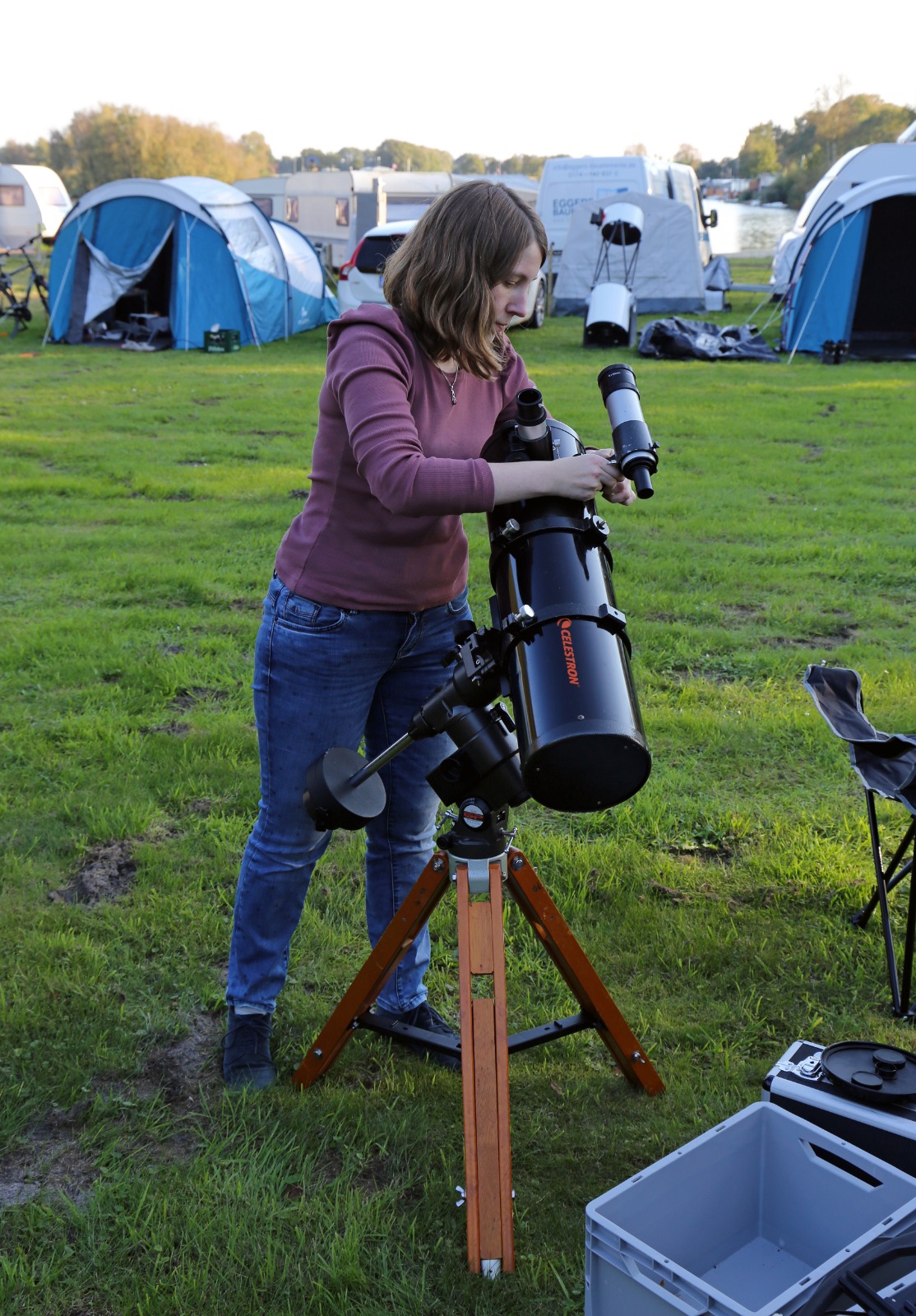
    Back in 2006, I bought my second telescope: a 6″ Newtonian reflector. At the time, my plan was to get more seriously into astronomy and take my first steps into astrophotography.

    Photo © by Matthias Schneider

    Compared to my old 3″ Newtonian, the 6″ telescope felt like a real upgrade. More aperture, more light, more detail — and, at least in theory, far more possibilities. I imagined using it for deep-sky objects, learning the basics of imaging and slowly building a setup that could do more than simple visual observing.

    The telescope originally came with a SkyView mount, but it soon became clear that the mount was not really stable enough for what I had in mind. For visual observing it might have been usable, but for astrophotography, even at a beginner level, the whole setup felt too flimsy. A telescope can have all the aperture in the world, but if the mount is not solid, the stars will quickly develop their own interpretation of modern art.

    So I returned the SkyView mount and replaced it with a second-hand Vixen GP-E mount. That turned out to be a much better choice. It was solid, reliable, and much better suited to the telescope. In fact, the Vixen GP-E is still part of my setup today.

    Still, the 6″ Newtonian never became quite as practical as I had hoped. I did not have a permanent place to leave it set up, so every observing session meant carrying the whole system outside in several parts: the optical tube, the mount, the tripod, counterweights and accessories. Usually, it took about three separate trips before everything was finally outside and ready to be assembled.

    That was fine for a planned observing night, but not very inviting for a quick look at the sky. And as often happens in amateur astronomy, the best telescope is not always the biggest one. It is the one you actually use.

    Over time, I noticed that I kept reaching for my old 3″ Newtonian instead. It was smaller, lighter and much quicker to set up. It simply matched my observing habits better. For spontaneous sessions, short nights outside or those moments when I just wanted to look at the Moon, a planet or a bright deep-sky object, the little 3″ Newtonian was often the easier choice.

    Looking back, the 6″ Newtonian was still an important step for me. It taught me a lot about telescope mounts, stability and the practical side of astrophotography. It also showed me that more aperture does not automatically mean more observing time.

    Sometimes, a telescope can be technically better and still not be the one that fits your life best.