Schlagwort: telescope

  • A Week Under the Stars

    A Week Under the Stars

    In October, I attended our annual star party in Zwischenbergen/Wiesmoor, where amateur astronomers from across Germany gathered to share their passion for the night sky. This year, we were fortunate to enjoy clear skies on several nights—and a few very special surprises. But more on that later.

    On October 5th, I traveled to Zwischenbergen with a friend, eager to kick off the event. One of the highlights of the evening was seeing the 16-inch Halfmann telescope of a fellow club member in action for the first time. When we arrived, he was showcasing the Dumbbell Nebula (M27), a breathtaking planetary nebula. The images were live-stacked, allowing us to see them in vivid color and detail—far beyond what’s possible with the naked eye.

    Next, we turned to the Ring Nebula (M57). Though the object is relatively small, it came alive in color, and its central star was clearly visible after a bit of processing. Finally, we moved on to the Crescent Nebula (NGC 6888), an emission nebula in the constellation Cygnus. Its brighter areas stood out beautifully, though the darker regions required more processing time to reveal their secrets.

    As the night went on, we wandered around, talking to other guests and admiring their setups. One observer used a small apochromatic refractor to photograph the Heart Nebula. The live-stacked images revealed intricate pillars of gas and dust, and I couldn’t help but marvel at the detail. Astrophotography has always fascinated me, but for now, it remains on my “someday” list.

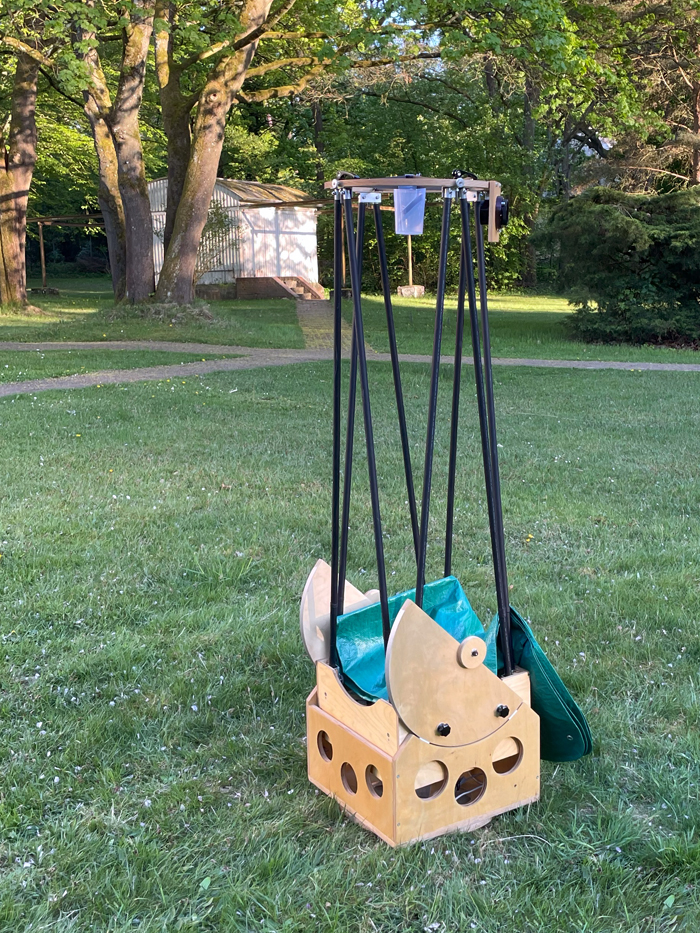
    I also took the opportunity to view Saturn through several telescopes. My favorite was a 16-inch Dobsonian, which provided a sharp and stunning view of the planet’s bands and its moons — three to the right, one to the left. The high humidity, however, posed a challenge, fogging up lenses and mirrors. After a bit more stargazing and conversation, we decided to head home, chilled but happy.


    The following night brought even colder temperatures, but with my down coat and a set of ultra-thick boots I kept myself warm enough to join my friends for another night. Although the visibility wasn’t as well as the night before I got rewarded with some fleeting glimpses of Draconid meteors. It was a quieter evening, perfect for catching up with club members and sharing stories.


    I couldn’t attend the following nights and was rather bummed to miss out seeing the northern lights. After getting my car back on October 8th, I was eager to rejoined my friends despite the cloudy skies. Around 1 a.m., the heavens cleared just enough to offer a glimpse of the stars, along with a few more Draconids streaking across the sky. The next day began with rain and wind, but even as the skies improved in the evening, the visibility remained poor. Since it was rather a „bottle 12“ than a Bortle 12 sky we engaged in conversations and got a surprise visit by another club member from southern Germany.


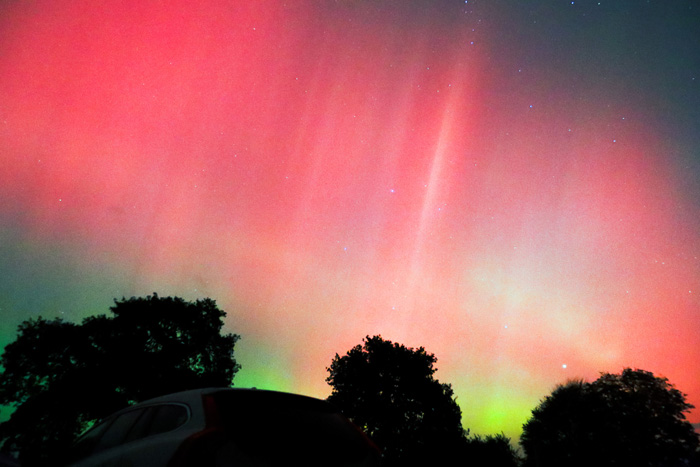
    Thursday night brought an unexpected highlight: northern lights. We had been alerted to a high KP index earlier in the day and as the first reports rolled in at dinner, we rushed back to our meeting place. The sky soon revealed a soft, reddish-green glow, forming a surreal backdrop for a presentation on constellation mythology. Slowly, the auroras transformed into a mesmerizing dance, their vibrant streaks weaving across the heavens. Captivated, I snapped photo after photo until clouds moved in, giving us a brief pause to sit and chat.

    Just as we thought the show was over, another wave of green and red lights appeared, this time brighter and stretching into the zenith. The sight was nothing short of magical—a perfect fusion of art and science. When the display finally faded, I had captured around 660 photos, which later became stunning time-lapse sequences.


    On Friday, we found time for solar observations. Using telescopes equipped with H-alpha filters, we marveled at sunspots and prominences. Later, a group ventured out to the fields in search of a clear view of the western horizon, hoping to spot Comet C/2023 A3. Unfortunately, low clouds made it hard to find the comet against the still light sky although Venus was clearly visible.

    Back at the meadow, many of us enjoyed casual conversations while others set up their equipment. As the night went on, the air grew heavy with humidity, making observations increasingly difficult. Jupiter and Saturn were once again in view through a Dobsonian, though the turbulent atmosphere made it impossible to see finer details. To lighten the mood, we joked about the music from a nearby party and decided to create our own festive atmosphere. Our „party“ featured leftover homemade liqueur and alcohol-soaked fruit, adding a humorous twist to the evening.


    Saturday featured a lecture by an astrophysicist from a neighboring club, exploring the origins and impacts of small celestial objects like comets and meteorites. That evening, the clouds parted briefly, allowing us to observe Jupiter, Saturn, and the Hercules Cluster. With rain in the forecast, many participants began packing up, and I decided to call it a night as well. This was the longest stay I’ve ever had at our star party, and the most time I’ve spent sleeping in my „mini-van“. My back was rather grateful for a normal bed that night xD

  • An enchanting Hamburg trip

    An enchanting Hamburg trip

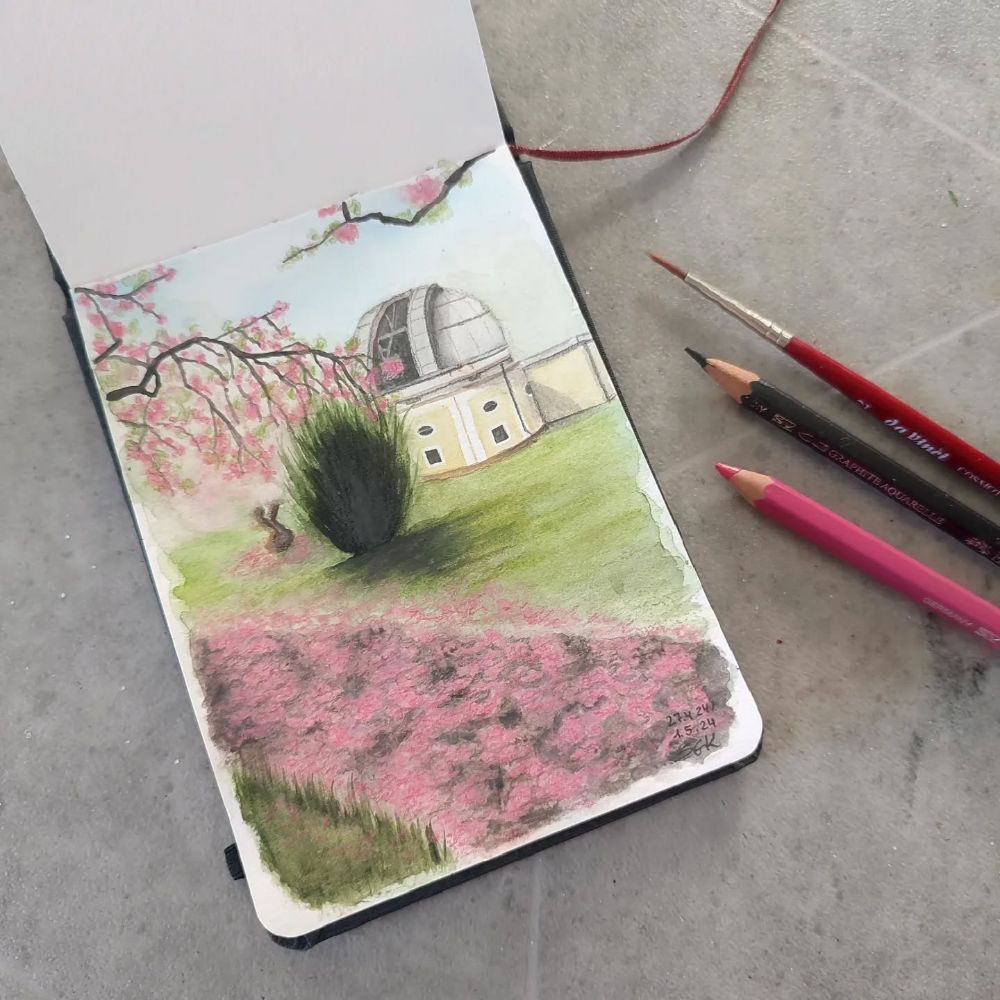
    It’s been a while since I posted something but I thought I’d share this sketch of the observatory in Hamburg Bergedorf. I visited it for a telescope meeting that took place along with the @lndmhh and it is absolutely worth the visit from all the telescopes right up to a library full of astronomical books 😍😍😍 Sadly we couldn’t show more than a few stars but it was still cool to talk with people who came to visit.

  • A spray-painted telescope pt. 4

    A spray-painted telescope pt. 4

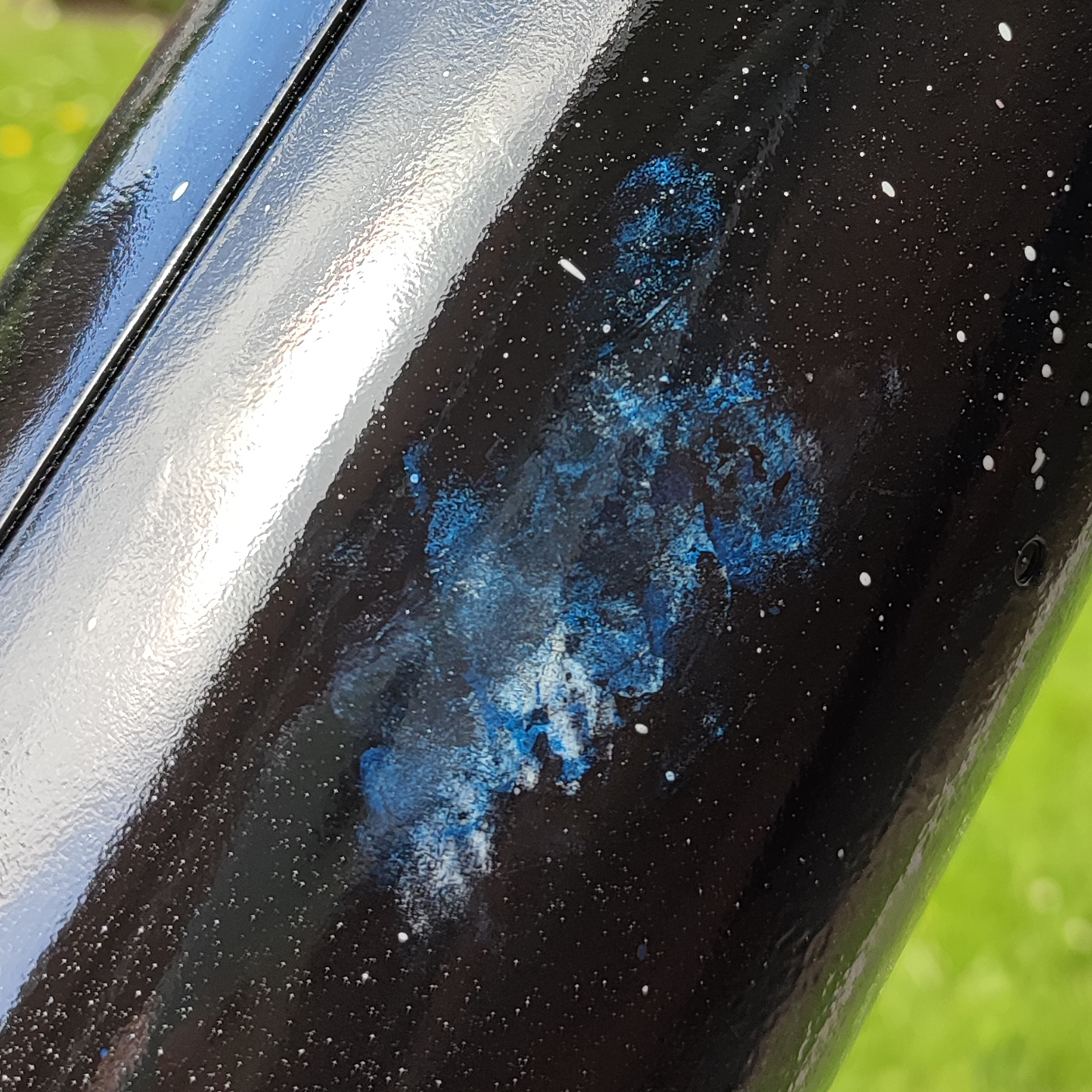
    My spraypainted telescope with clear coat

    It’s been a while since I talked about this project. But after those wrinkles I admit I was a bit frustrated. Sanding it down was quite some work. But with the wet sanding it worked best and I could smooth out most of the wrinkles.

  • A nightsky telescope (pt. 3)

    A nightsky telescope (pt. 3)

    My spraypainted telescope with clear coat

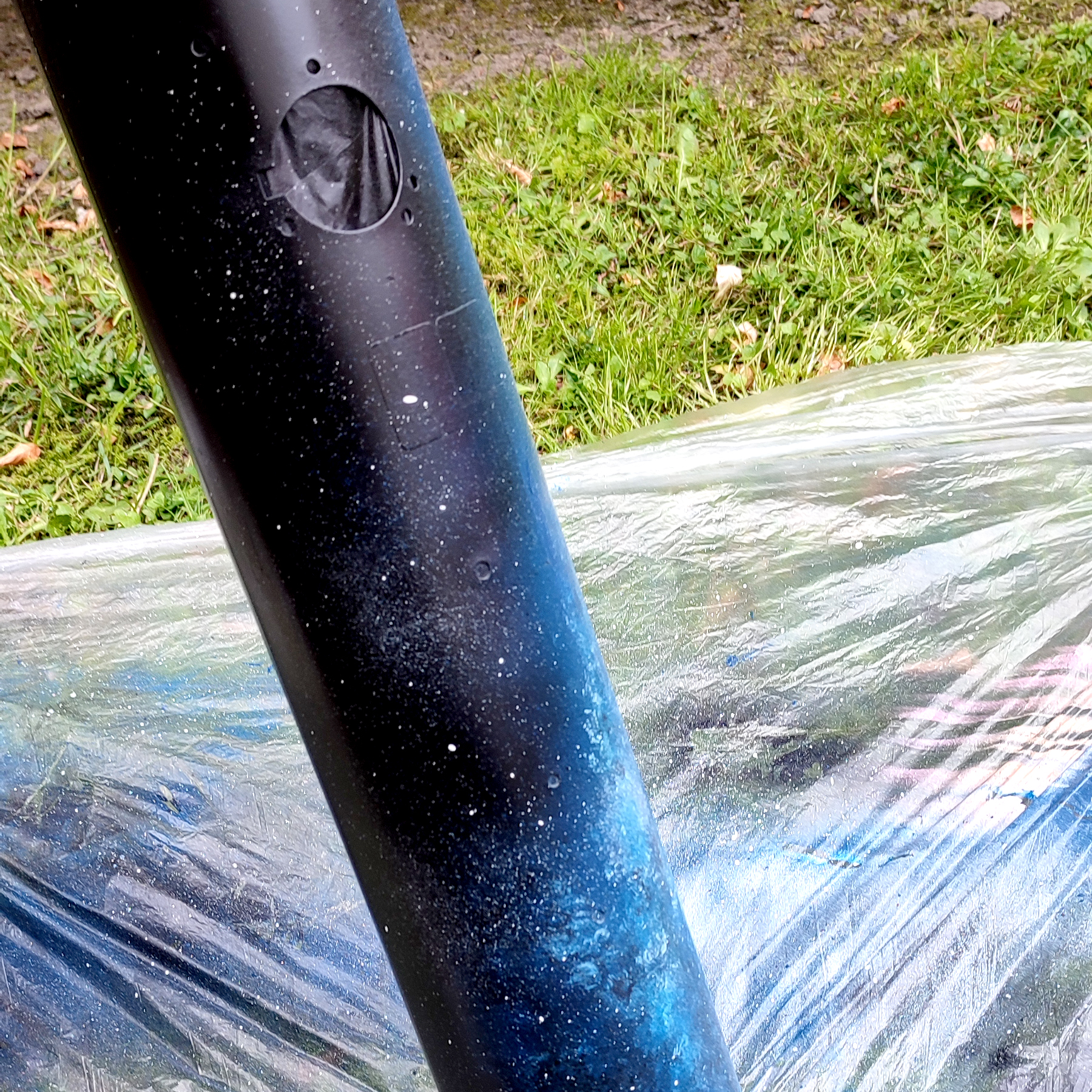
    Last part for the design, adding stars. After that it was just clear coating. Wait, just? If I hadn’t made a big mistake…

  • A nightsky telescope (pt. 2)

    A nightsky telescope (pt. 2)

    My spraypainted telescope

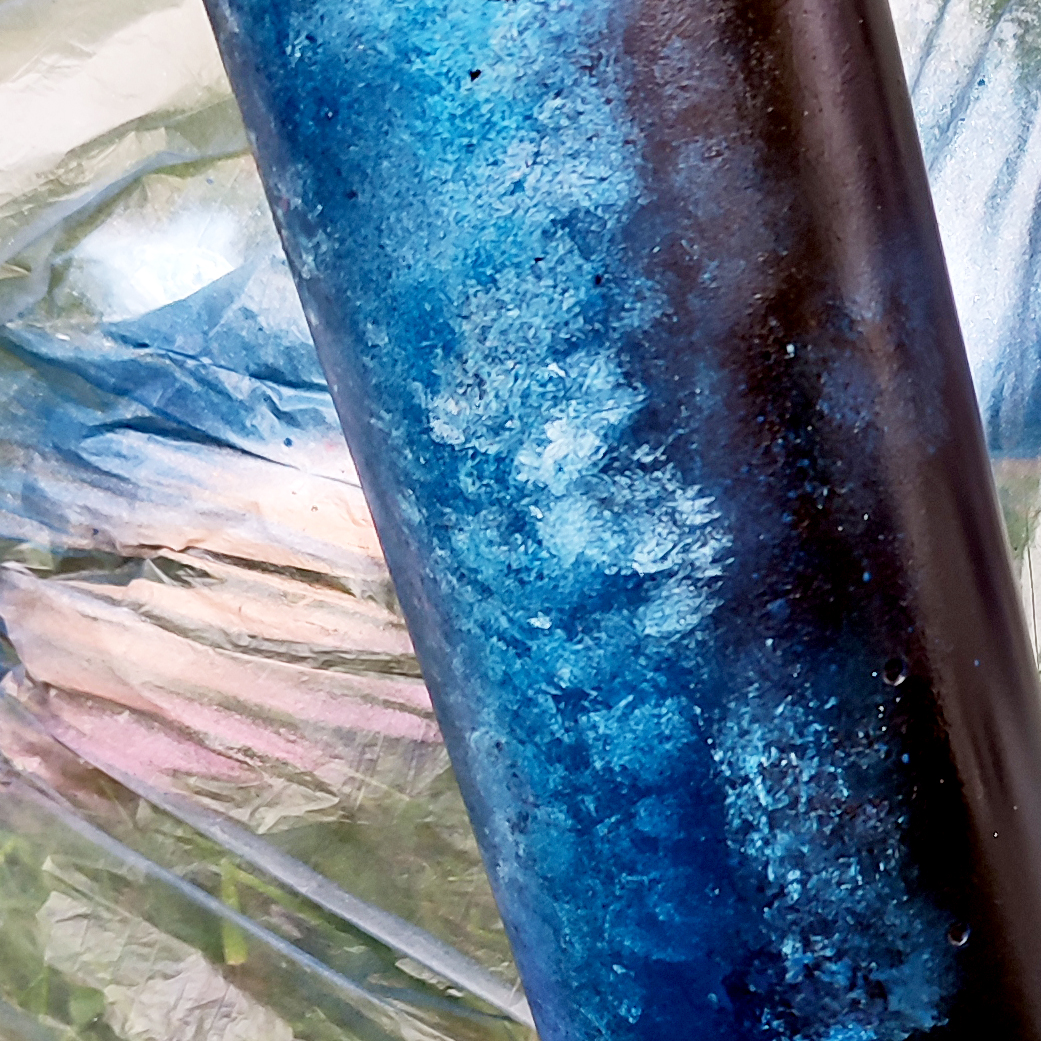
    The next part of my spray-paint experiment. This time I added more details to get that milky way look.

    The next part of my spray-paint experiment. This time I added more details to get that milky way look.

  • Experiments with spray-paint – A nightsky telescope (pt. 1)

    Experiments with spray-paint – A nightsky telescope (pt. 1)

    My spraypainted telescope

    A telescope became the test subject for my first real spray-painting experiment — part art project, part equipment mod, part “let’s hope I don’t ruin the optics.”

    For this project, I used a Bresser 76/700 mm telescope similar to my first 3″ Newtonian — not the original one, but a spare-parts donor that was the perfect test subject for a night-sky spray-painting experiment. In this first part you see the deconstruction and first layers of spray paint:

  • My first telescope

    In 1999, my parents gifted me my very first telescope: a Bresser 3″ Newton (76 / 700 mm). At the time, I had no idea what I was doing – the Moon was easy to find, but everything else felt impossible. Frustrated, I put it aside. Years later, some fellow amateur astronomers showed me how to navigate the night sky. That changed everything. From then on, I took every opportunity to observe – even if it was just a small break in the clouds.

    Despite its modest size, I used it for many years – more than any other telescope, in fact. From star parties in Germany, the Silvretta High Alpine Road and all the way to Scotland, this telescope was my trusted companion. While it doesn’t offer the detail of larger optics, I always loved pushing its limits. Sometimes others didn’t even believe me that I could see faint objects despite the small scope and the light-polluted sky near Stuttgart. On the Silvretta High Alpine Road I could even see the veil nebula. And it’s incredibly handy: lightweight, fast to set up, and perfect for a quick look at the stars.

  • A step toward more aperture

    A step toward more aperture

    Back in 2006, I bought my second telescope: a 6″ Newtonian reflector. At the time, my plan was to get more seriously into astronomy and take my first steps into astrophotography.

    Photo © by Matthias Schneider

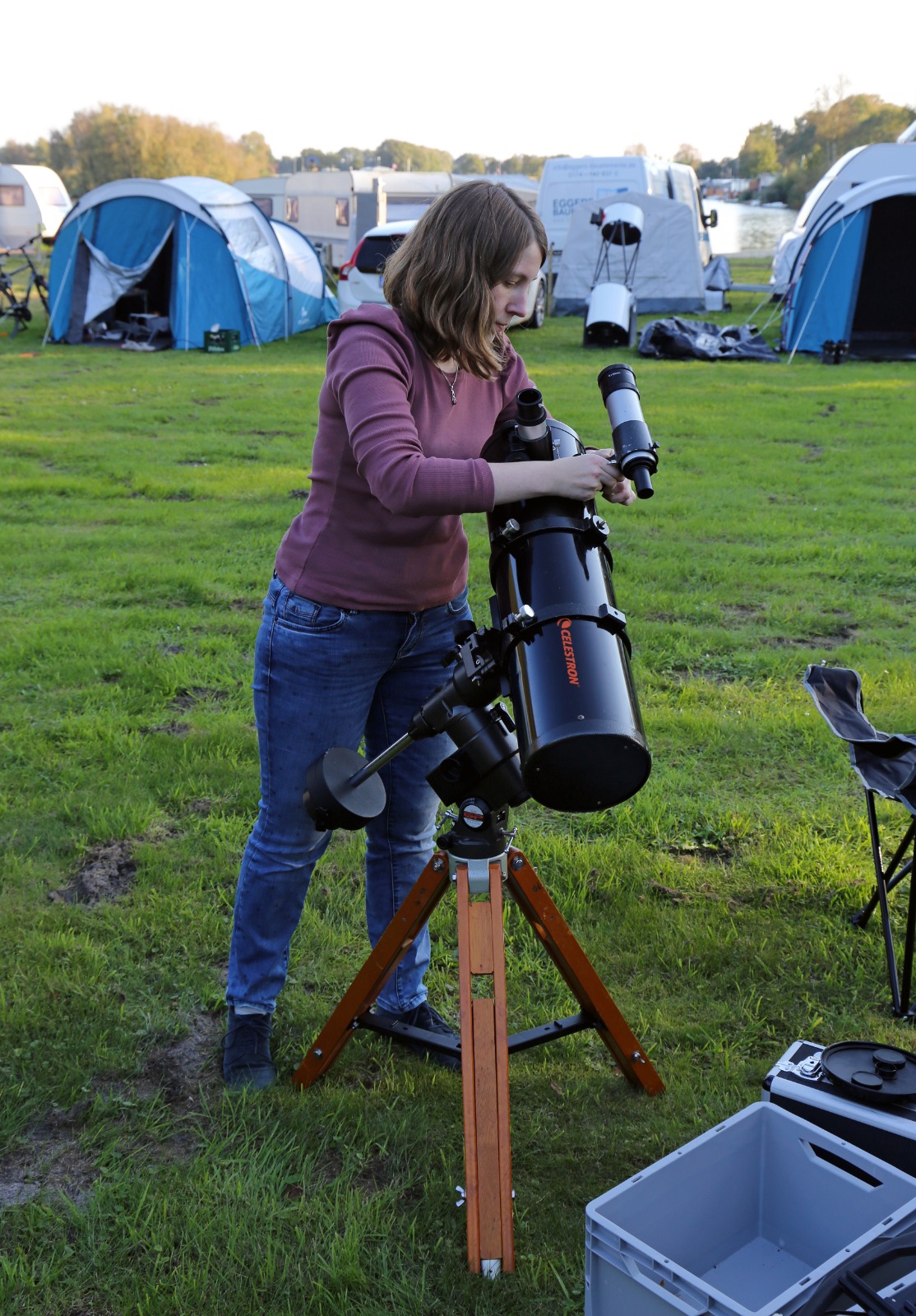
    Compared to my old 3″ Newtonian, the 6″ telescope felt like a real upgrade. More aperture, more light, more detail — and, at least in theory, far more possibilities. I imagined using it for deep-sky objects, learning the basics of imaging and slowly building a setup that could do more than simple visual observing.

    The telescope originally came with a SkyView mount, but it soon became clear that the mount was not really stable enough for what I had in mind. For visual observing it might have been usable, but for astrophotography, even at a beginner level, the whole setup felt too flimsy. A telescope can have all the aperture in the world, but if the mount is not solid, the stars will quickly develop their own interpretation of modern art.

    So I returned the SkyView mount and replaced it with a second-hand Vixen GP-E mount. That turned out to be a much better choice. It was solid, reliable, and much better suited to the telescope. In fact, the Vixen GP-E is still part of my setup today.

    Still, the 6″ Newtonian never became quite as practical as I had hoped. I did not have a permanent place to leave it set up, so every observing session meant carrying the whole system outside in several parts: the optical tube, the mount, the tripod, counterweights and accessories. Usually, it took about three separate trips before everything was finally outside and ready to be assembled.

    That was fine for a planned observing night, but not very inviting for a quick look at the sky. And as often happens in amateur astronomy, the best telescope is not always the biggest one. It is the one you actually use.

    Over time, I noticed that I kept reaching for my old 3″ Newtonian instead. It was smaller, lighter and much quicker to set up. It simply matched my observing habits better. For spontaneous sessions, short nights outside or those moments when I just wanted to look at the Moon, a planet or a bright deep-sky object, the little 3″ Newtonian was often the easier choice.

    Looking back, the 6″ Newtonian was still an important step for me. It taught me a lot about telescope mounts, stability and the practical side of astrophotography. It also showed me that more aperture does not automatically mean more observing time.

    Sometimes, a telescope can be technically better and still not be the one that fits your life best.