
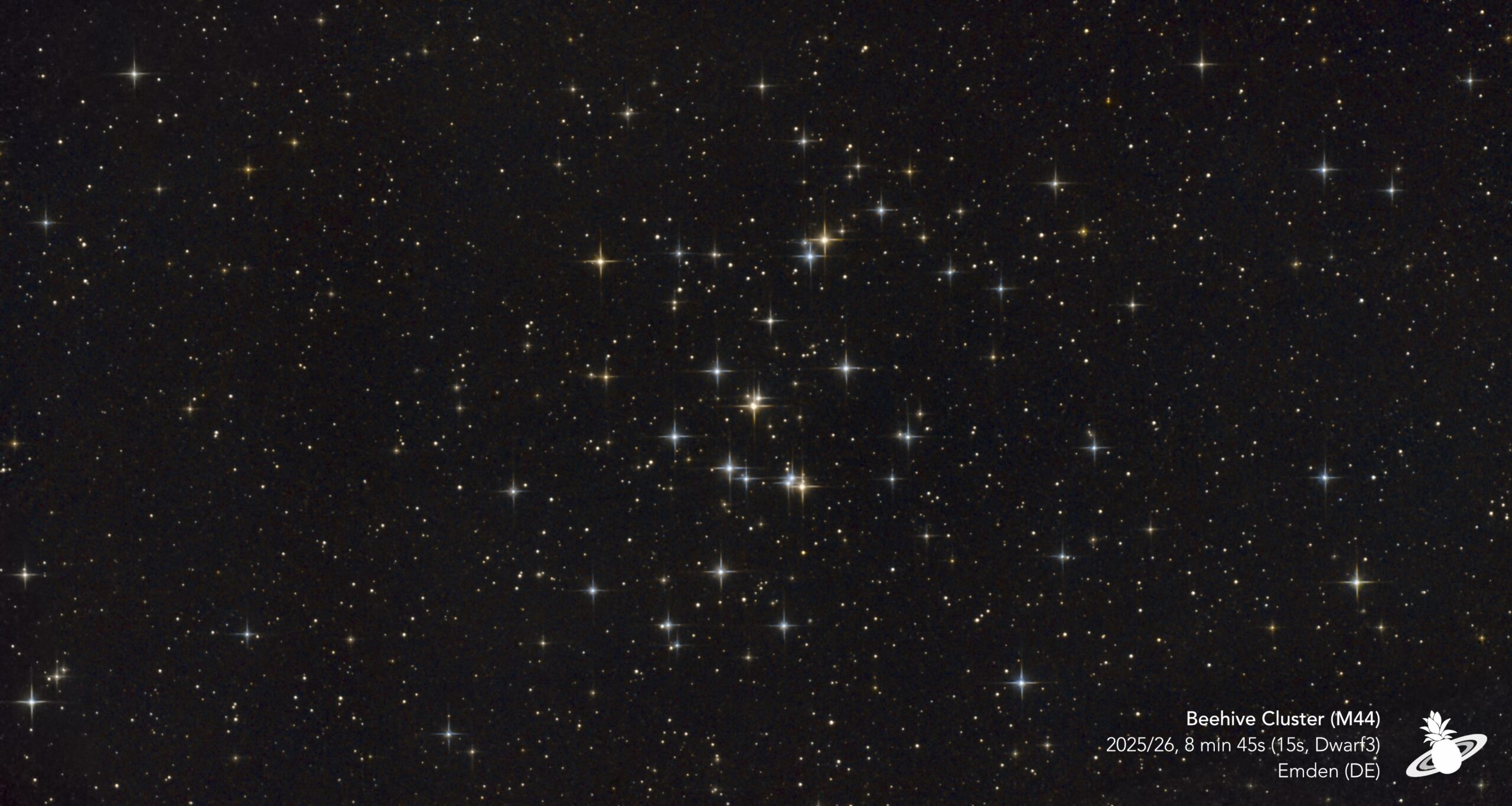
M44, better known as the Beehive Cluster, was a rather short target for me this time. I collected just under nine minutes of data – not exactly a deep exposure, but enough to capture the loose group of stars scattered across the field.
The Beehive is one of those objects that looks completely different from the nebulae and galaxies I photograph most often. There are no faint clouds to tease out or complicated structures hiding in the background.Just a rich open cluster with its brighter stars standing out among hundreds of smaller ones.
And right now, M44 is worth another look for a different reason: On October 11 and 12, Mars is passing through the Beehive Cluster in Cancer. From Earth, the red planet appears right among the stars of M44 in the early morning sky.
So if you happen to be awake before sunrise today or tomorrow, binoculars or a small telescope should give you a rather unusual version of the Beehive.